
The Mulu blog
Birthstones by Month: A Complete Guide
The birthstone for every month, what each stone looks like, and how well it stands up to everyday wear.
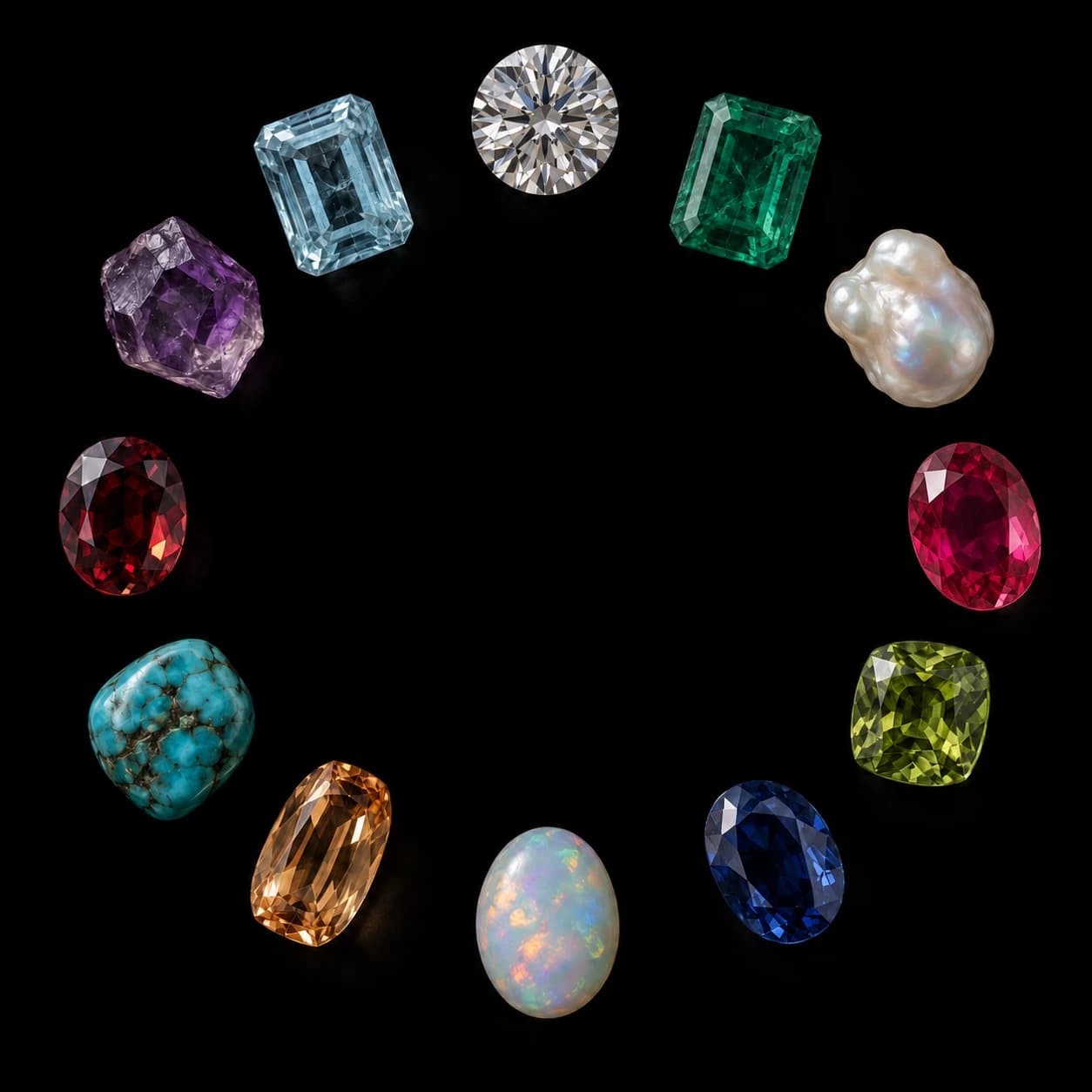
Every month has at least one birthstone, and several have more than one. Here is the full list, with each stone's hardness on the Mohs scale. The higher the number, the better a stone resists scratches, which matters most for a ring you plan to wear daily.
January to June
- January: garnet. Best known in deep red. Mohs 6.5 to 7.5.
- February: amethyst. Purple quartz. Mohs 7.
- March: aquamarine and bloodstone. Sea blue, or dark green flecked with red. Mohs 7.5 to 8, and 6.5 to 7.
- April: diamond. The hardest natural material. Mohs 10.
- May: emerald. Rich green, and often has natural inclusions. Mohs 7.5 to 8.
- June: pearl, moonstone and alexandrite. Pearl is soft at Mohs 2.5 to 4.5, moonstone is 6 to 6.5, and alexandrite is 8.5.
July to December
- July: ruby. Red corundum. Mohs 9.
- August: peridot, spinel and sardonyx. Olive green, jewel tones, or banded red and white. Mohs 6.5 to 7, 8, and 6.5 to 7.
- September: sapphire. Best known in blue. Mohs 9.
- October: opal and tourmaline. Opal shows a play of colour and is delicate at Mohs 5.5 to 6.5. Tourmaline is 7 to 7.5.
- November: topaz and citrine. Topaz is Mohs 8; golden citrine is 7.
- December: turquoise, tanzanite and zircon. Turquoise is 5 to 6, tanzanite 6 to 7, zircon 6.5 to 7.5.
Choosing one as a gift
If a month has several stones, choose by colour first, then by how the piece will be worn. Softer stones such as pearl, opal and turquoise are lovely in earrings and pendants, where they take fewer knocks. For a ring worn every day, sapphire, ruby and diamond are the most forgiving.