
The Mulu blog
10K, 14K or 18K Gold: What Is the Difference?
What karat means, how much pure gold each one contains, and which is the right choice for everyday jewelry.
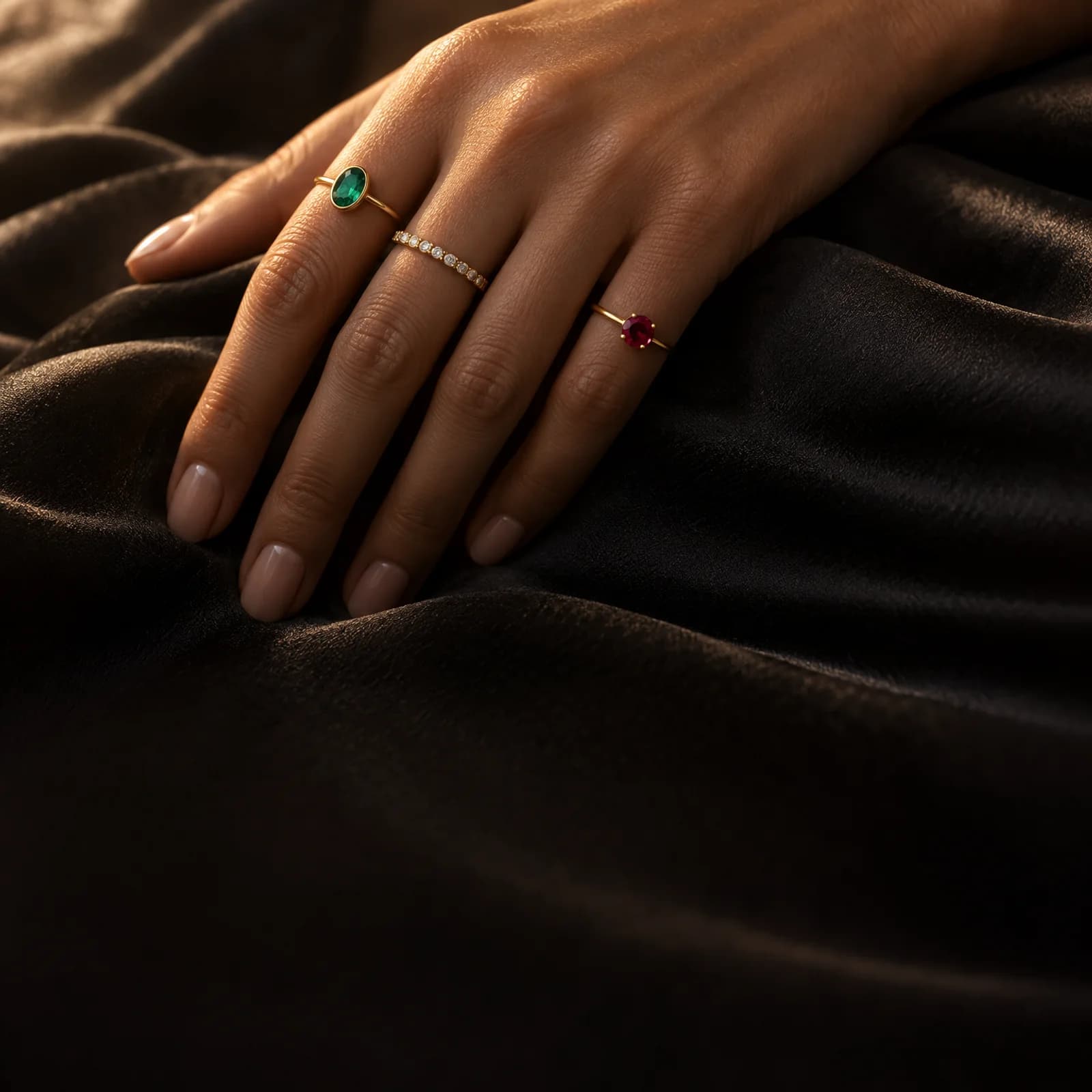
Karat tells you how much of a piece is pure gold, measured out of 24 parts. Pure gold is very soft, so it is mixed with other metals to make it strong enough to wear.
How much gold is in each
- 10K is 10 parts in 24, or 41.7% gold. Often stamped 10K or 417.
- 14K is 14 parts in 24, or 58.3% gold. Often stamped 14K or 585.
- 18K is 18 parts in 24, or 75% gold. Often stamped 18K or 750.
Which one should you choose?
10K is the most durable and the most affordable of the three, because it contains the most alloy. It is a practical choice for rings and bracelets that take daily wear.
14K is a balance of colour, strength and price, which is why it is so common in engagement rings.
18K has a deeper, richer colour and costs more. It is softer, so it can show scratches sooner.
Yellow, white and rose
The colour comes from the alloy. Rose gold contains more copper. White gold is usually coated in rhodium for its bright finish, and that coating wears over time and can be renewed by a jeweler. If you have a sensitivity to nickel, ask what a piece's alloy contains before you buy.